
GST registration is a mandatory step for many businesses and individuals operating in India. It serves as a legal identity under the Goods and Services Tax framework and enables businesses to charge GST, claim input tax credits, and comply with tax laws. Whether you are launching a new venture, offering services as a freelancer, or running a small shop, understanding GST registration requirements can prevent future compliance issues. The process is structured and can be completed online, but it demands accurate documentation and proper verification. This makes a reliable partner essential for smooth and correct registration.
What is GST Registration?
GST registration is the process of registering a business or individual under the Goods and Services Tax (GST) system in India. Once registered, a business receives a unique GSTIN (GST registration number), which acts as its identity for all GST-related transactions. This registration allows businesses to collect GST from customers, claim input tax credits, and comply with tax laws. It also establishes a legal presence and improves credibility when dealing with suppliers and clients.
What GST Registration Entails?
GST registration involves applying through the GST registration portal, submitting required documents, and verifying business details. The process ensures that every taxable business is recorded in the GST system, enabling the government to track transactions and collect taxes accurately. Registration is not limited to large companies. Even small businesses, freelancers, and contractors may need to register based on turnover, location, and type of supply.
The Role of GST Registration Number (GSTIN)
The GSTIN is a 15-digit number that identifies a registered taxpayer. It includes the state code, PAN number, and a unique identifier. The GSTIN is required for issuing GST-compliant invoices, filing returns, and claiming input tax credit. It is also essential for interstate trade, where GST registration becomes mandatory irrespective of turnover. The GSTIN links every transaction to the registered business and helps maintain transparency in tax records.
Why is GST Registration Important?
GST registration is crucial for businesses that wish to operate formally and avoid legal issues. It allows businesses to issue GST invoices, maintain proper tax records, and participate in the supply chain. Without registration, a business cannot collect GST, which may lead to penalties if it is required to register. Registered businesses can also claim input tax credit, reducing the overall cost of goods and services. This makes GST registration a key step for any business that aims to scale and maintain compliance.
Key Features of GST Registration
- Enables legal collection of GST
- Provides GSTIN for identification
- Allows input tax credit claims
- Facilitates interstate trade
- Requires periodic return filing
- Enhances business credibility
How does GST Registration Work Online?
GST registration online is performed through the official GST registration portal. The process starts with creating a login using the PAN and mobile number. After verification, the applicant fills out the GST registration form, uploads documents, and submits the application. The system assigns an ARN (Application Reference Number) for tracking the application status. After verification by tax authorities, the GST registration certificate is issued, which confirms the registration.
GST Registration Certificate and Its Importance
The GST registration certificate contains essential information such as the GSTIN, business name, date of registration, and type of registration. It serves as proof of registration and must be displayed at the business location. The certificate is used for compliance and official purposes, such as opening bank accounts, dealing with suppliers, and filing returns. It also acts as proof of eligibility to claim input tax credits and participate in formal trade.
GST Registration and Compliance Requirements
Once registered, a business must comply with GST rules. This includes issuing GST-compliant invoices, maintaining accurate records, and filing returns within specified timelines. Registered businesses must also maintain details of purchases, sales, and tax payments. Any changes in business details must be updated through amendments in the GST registration. Non-compliance can lead to penalties, interest, or cancellation of GST registration.
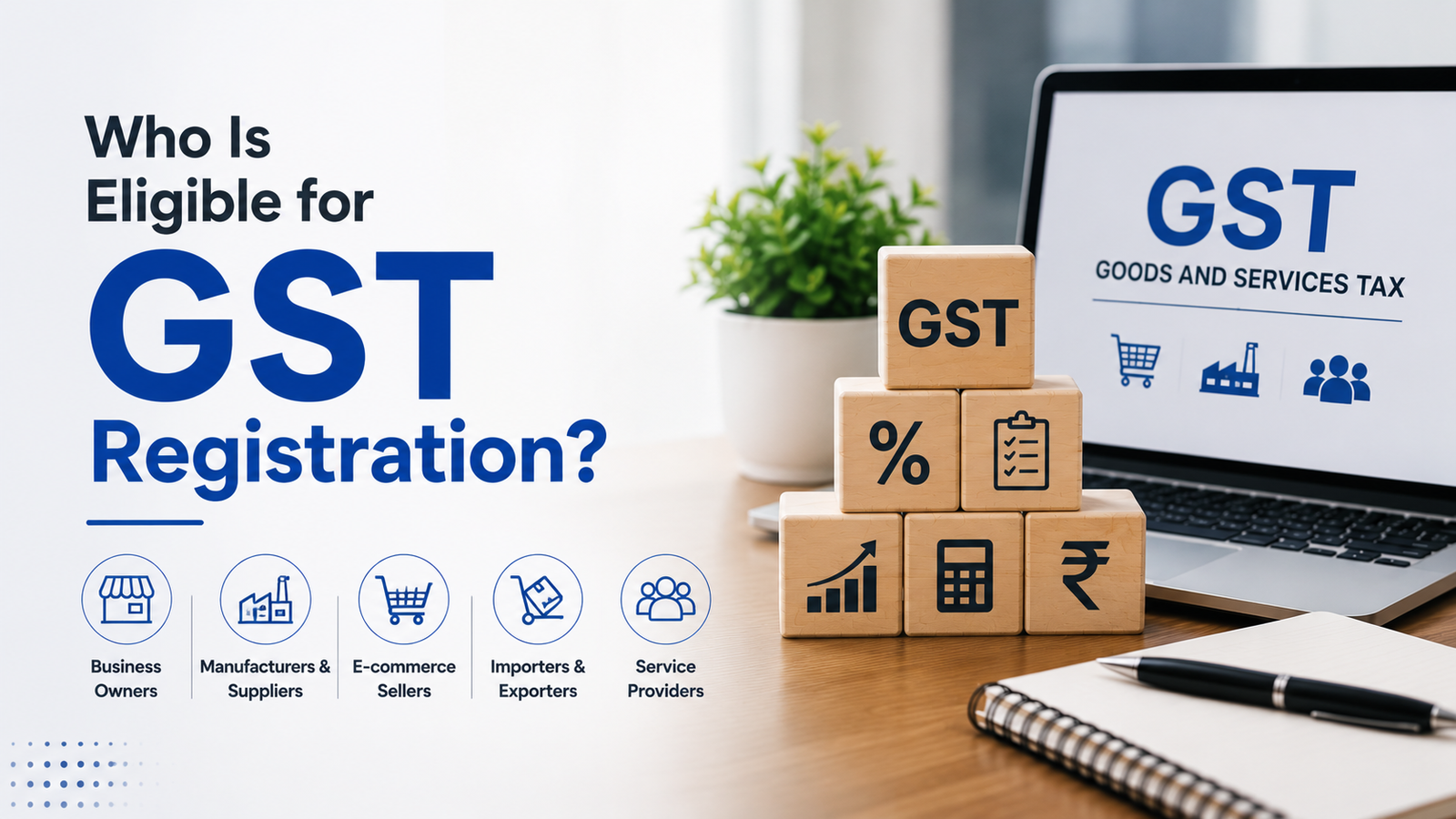
Who Needs GST Registration?
GST registration applies to a wide range of businesses and individuals in India. It is not limited to large enterprises. The requirement is based on turnover, type of business activity, and the nature of supplies. Many businesses need GST registration to operate legally, avoid penalties, and access tax benefits. If a business meets the mandatory criteria, GST registration becomes a legal obligation rather than an option.
Businesses Exceeding Turnover Threshold
Businesses whose annual turnover exceeds the prescribed limit must register for GST. This threshold varies depending on the nature of the business and the state where the business operates. For most service providers and traders, the threshold applies to the total annual turnover. For certain categories, including inter-state supplies, the threshold does not apply. This means that even small businesses may need to register if they supply goods or services across state lines.
Inter-State Suppliers and E-Commerce Sellers
Any business supplying goods or services across state borders must register for GST, regardless of turnover. Inter-state transactions are a core component of the GST framework, and registration ensures proper tax tracking and compliance. E-commerce sellers also fall under the mandatory GST registration rules. Selling through online platforms triggers GST registration requirements, even for small sellers or freelancers, because the supply is considered interstate or involves third-party platforms.
Businesses Required to Register Regardless of Turnover
Certain businesses must register for GST even if their turnover is below the threshold. These include businesses involved in supplying taxable goods or services through e-commerce operators, casual taxable persons, and non-resident taxable persons. Professionals providing services such as consultancy, freelancing, or contractual work may also need GST registration if their activities fall under taxable supplies.
Special Categories of Businesses
Some specific business categories require mandatory GST registration. These include businesses involved in the supply of goods through agents, businesses involved in reverse charge mechanisms, and those providing goods or services on behalf of others. Contractors, service providers, and traders operating in specific sectors may also fall under mandatory GST registration rules due to the nature of their services or business operations.
Businesses That Benefit from Voluntary Registration
Some businesses choose GST registration voluntarily even if they do not meet the threshold. This includes small businesses aiming to build credibility, start-ups seeking formal recognition, and freelancers who want to claim input tax credits on their expenses. Voluntary registration can also help businesses expand to new markets, as GST registration enables participation in formal supply chains and improves vendor relationships.
Businesses Using Multiple Locations
Businesses operating from multiple states or having branches in different locations may need separate GST registrations for each state. This is because GST is a state-based tax system and requires proper registration for each place of business. For example, a business with branches in multiple states must obtain GST registration for each state, ensuring compliance and accurate tax reporting.
Who Must Register: A Quick Checklist
- Businesses with taxable supplies exceeding the threshold
- Inter-state suppliers
- E-commerce sellers
- Casual taxable persons
- Non-resident taxable persons
- Businesses operating under the reverse charge mechanism
- Businesses with multiple state locations
Consequences of Not Registering
Failing to register when required can lead to penalties, interest on unpaid tax, and legal action. Businesses may also face issues in claiming input tax credits and may lose credibility with customers and suppliers. Additionally, non-registered businesses cannot issue GST invoices or participate in formal supply chains.
Benefits of GST Registration
GST registration offers multiple benefits that go beyond mere tax compliance. It acts as a legal identity and opens up new opportunities for businesses to grow. Registered businesses can claim input tax credit, which reduces the cost of supplies and improves profit margins. GST registration also enables a business to participate in formal supply chains, improving credibility with customers, vendors, and financial institutions. It helps businesses maintain transparency and stay compliant with tax laws.
Tax Benefits and Input Credit
One of the primary benefits of GST registration is the ability to claim input tax credit. This means businesses can deduct the tax paid on purchases from the tax collected on sales. The result is a reduction in the overall tax burden, making products and services more competitively priced. For manufacturers and service providers, this benefit is crucial because it directly impacts cost structures and profitability.
Enhanced Credibility and Business Growth
GST registration improves credibility in the market. Registered businesses are viewed as legitimate and compliant, which builds trust among customers and suppliers. This credibility helps businesses secure contracts, negotiate better deals, and access larger markets. Banks and financial institutions also prefer registered businesses when providing loans, credit, or trade facilities. A GST-registered business is more likely to grow faster due to its formal recognition.
Easier Inter-State Trade
GST registration enables businesses to supply goods and services across states without the need for multiple indirect tax registrations. Inter-state trade becomes simpler because GST is a unified tax system. For businesses expanding to other states, GST registration removes barriers and ensures smooth transactions. It also allows businesses to maintain consistent pricing and taxation across locations.
Benefits of Input Tax Credit
- Reduces overall tax liability
- Lowers the cost of production
- Improves profit margins
- Encourages compliance and transparency
- Supports competitive pricing
Improved Compliance and Record Keeping
GST registration requires businesses to maintain proper records and file returns on time. This leads to better bookkeeping practices and financial management. Accurate records also help businesses during audits and assessments. Registered businesses can easily track purchases, sales, and tax payments. This improves financial discipline and reduces the risk of penalties.
Access to Government Contracts and Tender
Many government contracts require suppliers to be GST-registered. GST registration becomes a prerequisite for participating in government tenders and projects. Businesses seeking long-term contracts or institutional clients can benefit from GST registration, as it demonstrates compliance and legal recognition.
Types of GST Registration
GST registration covers multiple types depending on the business model, location, and nature of supply. Each type has unique registration rules, documentation needs, and compliance requirements. Choosing the correct registration type is essential for smooth operations and avoiding legal complications. The GST registration portal offers options to select the appropriate type based on the business structure, whether it is a sole proprietorship, partnership, LLP, private limited company, or a casual taxable person.
Regular GST Registration
Regular GST registration applies to most businesses with taxable supplies above the threshold. This type is suitable for traders, manufacturers, service providers, and retailers operating within a state. It requires full compliance, including filing monthly or quarterly returns and maintaining proper records. Regular registration allows businesses to collect GST, claim input tax credits, and participate in formal supply chains.
Composition Scheme Registration
Composition scheme registration is available for small businesses with a turnover below the specified limit. Under this scheme, businesses pay tax at a fixed rate on turnover instead of collecting GST from customers. This simplifies compliance by reducing return filings and recordkeeping. However, businesses under composition cannot claim input tax credit, and they cannot supply goods or services outside their state. This type is best suited for small traders, small manufacturers, and small restaurants.
Special Category Registration
Some businesses require special category registration due to the nature of their operations. This includes non-resident taxable persons, casual taxable persons, and e-commerce operators. These categories require specific registration rules and timelines. For example, a non-resident taxable person must register before making taxable supplies in India, while a casual taxable person needs to register for temporary business operations.
GST Registration for Multiple Locations
Businesses operating in multiple states need separate GST registrations for each state. This is because GST is administered state-wise, and each place of business requires registration. Multi-state registration helps businesses maintain compliance across locations and ensures proper tax reporting. This type of registration is common for businesses with branches, warehouses, or offices in different states.
Types of GST Registration
- Regular GST registration
- Composition scheme registration
- Casual taxable person registration
- Non-resident taxable person registration
- E-commerce operator registration
- Multiple state registration
- Input service distributor registration
Registration for Specific Business Models
Certain business models require specific GST registration types. For example, e-commerce operators must register as a distinct category because they facilitate transactions for multiple sellers. Similarly, businesses that distribute input services across branches can register as input service distributors. This registration allows for centralising tax credit distribution within the organisation.
GST Registration for Agents and Intermediaries
Agents, brokers, and intermediaries may require GST registration depending on their services and turnover. These businesses often facilitate transactions between buyers and sellers and may be liable for GST on their commission or fees. It is important to select the correct registration type to ensure compliance with GST rules.
Documents Required for GST Registration
GST registration requires specific documents to verify the business, identity, and place of operation. Accurate documentation is essential for successful registration and avoiding delays. The GST registration portal lists required documents, and applicants must upload clear copies during the online process. Businesses must ensure that all documents are valid, updated, and aligned with the business details provided in the application.
Identity Proof Documents
Identity proof is required for the primary applicant or authorised signatory. It helps verify the person responsible for the GST registration. Identity proof documents include PAN card, Aadhaar card, and passport for foreign nationals. For partnerships and companies, identity proof is required for all partners or directors as applicable. The identity proof must match the details in the GST registration form.
Address Proof Documents
Address proof is essential to confirm the business location. The GST registration portal accepts documents such as an electricity bill, a property tax receipt, a rent agreement, or a bank statement showing the business address. For rented premises, a rent agreement along with an NOC from the owner is required. For owned premises, ownership documents must be submitted. Address proof must be recent and valid.
Business Proof Documents
Business proof documents are required to establish the nature of the business. These include incorporation certificates for companies, partnership deeds for partnerships, registration certificates for societies, and business registration proof for proprietorships. These documents confirm the legal existence of the business and the structure under which it operates.
Bank Account Proof
Bank account proof is necessary to verify the financial details of the business. A cancelled cheque, bank statement, or passbook copy showing the account holder’s name and account number is required. Bank account proof ensures that tax refunds and payments can be processed accurately. The account must be active and linked to the business name.
List of GST Registration Documents
- PAN card of the applicant
- Aadhaar card of the applicant
- Passport (for foreign nationals)
- Proof of business address
- Rent agreement or ownership proof
- NOC from the property owner
- Incorporation certificate or business registration
- Partnership deed (if applicable)
- Bank statement or cancelled cheque
- Digital signature (if required)
Additional Documents for Specific Business Types
Certain business types require additional documents for GST registration. For example, businesses dealing in food, chemicals, or pharmaceuticals may require licenses related to their industry. Importers and exporters may need IEC (Import Export Code) documentation. Businesses operating through e-commerce platforms may need additional documents to verify their operations. These documents ensure compliance with industry-specific regulations.
Documents for Multiple State Registration
Businesses with multiple locations must provide address proof for each place of business. Each state registration requires separate documentation for the specific location. This includes a separate rent agreement, ownership proof, and address proof for every branch. Proper documentation ensures that each location is verified and approved by tax authorities.
Documents for Authorised Signatory
GST registration requires an authorised signatory who will be responsible for filing returns and managing compliance. The authorised signatory must provide identity proof, address proof, and a photograph. A board resolution may be required for companies to appoint the authorised signatory. The signatory details must match the information provided in the GST registration form.
GST Registration Process (Step-by-Step)
GST registration is completed through the GST registration portal and involves several structured steps. The process is designed to verify the identity and legitimacy of the business. A clear understanding of the registration process, step by step, helps businesses avoid delays and ensures accurate submission. The online process is straightforward, but it requires careful attention to detail and proper documentation.
Step 1: Create a User Account on the GST Portal
The first step is to create a user account on the GST registration portal. This requires entering the PAN of the business owner or authorised signatory. The portal sends an OTP to the registered mobile number and email for verification. Once verified, the user account is created, and the applicant can proceed to the registration form.
Step 2: Fill the GST Registration Form
After account creation, the applicant must fill out the GST registration form. The form captures essential business details, including legal name, trade name, address, business type, and contact information. The applicant must also enter details of the business activity and bank account. Accuracy is crucial as any mismatch may lead to rejection or delays.
Step 3: Upload Required Documents
Once the form is completed, the next step is to upload the required GST registration documents. These include identity proof, address proof, business proof, and bank account proof. The documents must be uploaded in the specified format and size. Clear and valid documents help speed up verification and approval.
Step 4: Verification and Submission
After uploading documents, the applicant reviews the form and applies. The portal generates an Application Reference Number (ARN) for tracking. The ARN is used to check the GST registration status on the portal. The tax authorities review the application and verify the details provided.
GST Registration Process Step by Step
- Create a user account using PAN
- Verify mobile and email with OTP
- Fill the GST registration form
- Upload required documents
- Review and submit the application
- Receive ARN for tracking
- Wait for verification by the authorities
- Receive the GST registration certificate
Step 5: Verification by Tax Authorities
Tax authorities verify the submitted application and documents. The verification may include checking the business address, confirming the nature of business, and ensuring all details match the documents. If the authorities require additional information, they may send a notice through the portal. Responding promptly to any queries ensures faster approval.
Step 6: Issuance of GST Registration Certificate
Once verification is complete, the GST registration certificate is issued. The certificate contains the GST registration number, business name, date of registration, and other essential details. The certificate is available for download from the GST portal. Businesses must keep a copy of the certificate and display it at their business location.
GST Registration Fees & Timeline
GST registration is designed to be accessible and cost-effective for businesses. One of the most important aspects of the process is understanding the fees involved and the expected timeline. The GST registration fees and timeline depend on the type of business, the method of registration, and the accuracy of documentation. Knowing what to expect helps businesses plan effectively and avoid unnecessary delays.
GST Registration Fees
GST registration online is generally free when applied directly through the GST registration portal. The official portal does not charge a fee for the registration application. However, businesses may incur additional costs if they hire professionals for assistance, such as a CA, tax consultants, or legal experts. These costs vary based on the complexity of the business and the level of support required. It is important to distinguish between official GST registration fees and professional service charges.
Professional Assistance Costs
Professional assistance may include help with documentation, form-filling, verification, and follow-up with authorities. Businesses with multiple locations or complex structures, such as LLPs and private limited companies, often prefer professional support. The costs may vary depending on the scope of work and the experience of the professional. While professional help can improve accuracy and speed, businesses should be aware of these additional costs.
GST Registration Timeline
The timeline for GST registration depends on several factors, including the accuracy of the submitted documents, the completeness of the application, and the verification process by tax authorities. In many cases, the registration process is completed within a few days if the application is accurate and the documents are valid. However, delays can occur if there are discrepancies in the documents or if the authorities require additional information.
Typical Timeline
- Submission of application: same day
- Verification by authorities: 1 to 3 days
- Additional verification (if required): 3 to 7 days
- Issuance of GST registration certificate: 5 to 10 days
Factors Influencing Timeline
Several factors can influence the timeline of GST registration. Incomplete documents, mismatched details, or errors in the application form can lead to delays. Businesses must ensure that all information is accurate and consistent with official records. The verification process may also take longer during peak periods when many applications are submitted. Prompt response to notices can also reduce the timeline.
Late Fee for Delayed Registration
Businesses that delay GST registration beyond the required timeline may face penalties or late fees. The late fee depends on the duration of delay and the nature of the business. It is essential to register within the specified timeframe to avoid penalties. Businesses must monitor their turnover and compliance requirements to ensure timely registration.
Timeline for Different Business Types
The timeline may vary for different business types. For example, a sole proprietorship with complete documents may receive registration faster than a private limited company with multiple directors. Businesses operating across states or with multiple locations may also experience longer timelines due to additional verification. It is important to plan accordingly and prepare all documents in advance.
GST Registration for Different Business Types
GST registration requirements vary depending on the type of business and its structure. Each business type has specific rules, documentation needs, and compliance obligations. Choosing the correct registration path is crucial to ensure smooth operations and avoid penalties. Whether the business is a sole proprietorship, LLP, private limited company, or a freelancer, the GST registration process is designed to verify legitimacy and maintain tax compliance.
GST Registration for Sole Proprietorship
Sole proprietorship is one of the most common business structures. GST registration for a sole proprietorship involves submitting identity proof, address proof, business proof, and bank details. The business owner must use their PAN and Aadhaar for verification. A sole proprietor can register online through the GST registration portal and receive the GST registration certificate once verified. It is essential to maintain accurate records and file returns as required.
GST Registration for Partnership and LLP
Partnership firms and LLPs must register under GST if their turnover exceeds the prescribed threshold or if they are involved in interstate supply. The registration requires documents such as the partnership deed, PAN of partners, and address proof. LLP registration also requires information about designated partners and their identity proof. The GST registration process for LLPs and partnerships may take longer due to multiple stakeholders and verification needs.
GST Registration for Private Limited Company
Private limited companies have more complex registration requirements. They must provide an incorporation certificate, PAN, address proof, and details of directors. The GST registration portal requires a digital signature for directors in some cases. Private limited companies often require additional verification due to their structure and compliance obligations. The registration process is similar to other business types but may involve more documentation.
GST Registration for Traders and Wholesalers
Traders and wholesalers engaged in buying and selling goods must register under GST if their turnover exceeds the threshold. They must submit business proof, address proof, and bank details. Traders involved in interstate supply must register irrespective of turnover. Wholesalers dealing with large volumes of goods must maintain accurate records and file returns to comply with GST rules.
GST Registration for Contractors and Service Providers
Contractors and service providers must register under GST if their turnover exceeds the threshold or if they are engaged in interstate supply. Contractors providing services such as construction, maintenance, and repair may require GST registration for compliance. Service providers must also maintain records of invoices and tax payments. GST registration helps them issue GST-compliant invoices and claim input tax credits.
List of Business Types and Registration Requirements
- Sole proprietorship
- Partnership firm
- LLP
- Private limited company
- Traders and wholesalers
- Contractors and service providers
- Freelancers
- Small businesses and startups
GST Registration for Freelancers
Freelancers offering services such as writing, design, or consulting may require GST registration based on turnover. Freelancers must submit identity proof, address proof, and bank details. GST registration for freelancers helps them issue GST invoices and claim input tax credit on business expenses. It also adds credibility when dealing with corporate clients.
GST Registration for Small Businesses and Startups
Small businesses and startups may choose GST registration voluntarily or may be required based on turnover. Registration helps them establish a formal identity and access formal supply chains. Startups can use GST registration to build credibility with investors and partners. The process requires accurate documentation and adherence to compliance rules.
Common GST Registration Mistakes to Avoid
GST registration is a structured process, but errors during application can lead to delays, rejections, or compliance issues. Avoiding common mistakes ensures smoother registration and prevents complications later. Many businesses make errors in documentation, details, or application submission, which can create unnecessary hurdles. Understanding typical mistakes and how to prevent them can help businesses complete registration efficiently and accurately.
Incorrect PAN or Business Details
One of the most common mistakes is entering incorrect PAN or business details. The PAN is a critical identifier for GST registration, and any mismatch can lead to rejection. Business details such as legal name, trade name, and address must match official records. It is important to verify all information before applying to avoid delays in verification.
Incomplete or Incorrect Documents
Another frequent mistake is uploading incomplete or incorrect documents. Documents must be clear, valid, and properly scanned. Blurred images, expired documents, or missing pages can cause rejection. Businesses should ensure that the documents are complete and match the information provided in the application. Proper documentation improves the chances of quick approval.
Wrong Business Address or Missing NOC
An incorrect business address or a missing NOC from the property owner can delay registration. If the business operates from a rented property, a valid rent agreement and NOC from the owner are required. For owned premises, ownership proof must be submitted. Address details must be accurate and match the documents. Any discrepancy can lead to verification issues.
Common Mistakes in GST Registration
- Incorrect PAN details
- Mismatched business name or address
- Uploading invalid or expired documents
- Missing NOC or rent agreement
- Incorrect bank account details
- Not verifying email or mobile number
- Incomplete form submission
- The incorrect nature of the business selected
Errors in Bank Account Details
Incorrect bank account details can cause issues with tax refunds and payments. The bank account must be active and linked to the business name. A cancelled cheque or bank statement must clearly show the account holder’s name and account number. Businesses should verify bank details carefully before submission.
Failure to Respond to Notices
Tax authorities may send notices or requests for additional information. Failure to respond promptly can delay the registration process. Businesses should monitor the GST registration status and respond to any notices within the given timeline. Prompt responses help prevent delays and ensure smooth verification.
Incorrect Business Structure Selection
Selecting the wrong business structure during registration can create compliance problems later. Businesses must select the correct business type, such as sole proprietorship, partnership, LLP, or private limited company. The selected structure must match the legal business documents. Incorrect selection can lead to issues in filing returns and claiming input tax credit.
GST Registration Amendments
GST registration amendments are necessary when there are changes in business details or operations. The GST registration portal allows registered taxpayers to update information such as address, business name, contact details, bank account, and authorised signatory. Making amendments ensures that the GST records remain accurate and up to date. Failure to update details can lead to compliance issues, penalties, or challenges in filing returns.
Types of Amendments Allowed
The GST registration portal supports multiple types of amendments. These include changes in business address, business name, contact details, bank account, and nature of business. Amendments may also involve adding or removing partners, directors, or authorised signatories. Businesses must follow the correct amendment process and upload the required documents for verification.
How to Submit an Amendment Request?
To submit an amendment request, the taxpayer must log in to the GST portal and access the amendment section. The taxpayer selects the field that needs to be updated and uploads supporting documents. After submission, the portal generates an ARN for tracking the amendment request. The tax authorities review the request and approve the changes once verified. The updated GST registration certificate is then available for download.
Amendment Requirements and Documents
Amendments require supporting documents that justify the changes. For example, an address change requires new address proof, such as a rent agreement or an electricity bill. A change in bank account requires a cancelled cheque or bank statement. Changes in authorized signatory require identity proof and a board resolution in case of companies. It is important to ensure that the documents match the updated details.
GST Registration Amendments
- Change in business address
- Change in business name
- Change in contact details
- Change in bank account
- Change in business structure
- Addition or removal of partners/directors
- Change in authorised signatory
- Change in business nature or activity
Common Reasons for Amendments
Businesses may need amendments due to relocation, expansion, restructuring, or a change in ownership. Startups may change their business model, requiring updates to the nature of the business. Businesses with multiple branches may add or remove locations. Amendments ensure that GST records reflect the current business operations and help avoid discrepancies during audits.
Impact of Amendments on Compliance
Amendments help maintain compliance and avoid penalties. Accurate records ensure that GST returns match the business details. Any mismatch between GST records and actual business operations can lead to issues during assessments. Updating GST registration details ensures that communication from tax authorities reaches the correct address and contact information.
GST Cancellation & Revocation
GST cancellation and revocation refer to the process of cancelling a GST registration or revoking a cancelled registration. Cancellation may be initiated by the taxpayer or by the tax authorities. It is necessary when a business closes, changes structure, or no longer meets GST requirements. Revocation allows a cancelled registration to be restored if the business resumes operations or meets conditions again. Understanding these processes helps businesses manage compliance and avoid unnecessary penalties.
Reasons for GST Cancellation
GST cancellation can occur due to various reasons such as business closure, cessation of taxable supplies, non-compliance, or a change in business structure. Tax authorities may also cancel registration if the taxpayer fails to file returns, provides incorrect information, or fails to respond to notices. Cancellation is a serious compliance action and affects the ability to issue GST invoices and claim input tax credit.
Types of GST Cancellation
Cancellation can be voluntary or involuntary. Voluntary cancellation is initiated by the taxpayer when the business stops operations or no longer requires GST registration. Involuntary cancellation is initiated by the tax authorities due to non-compliance or incorrect information. In both cases, the taxpayer must complete the required formalities and submit relevant documents for cancellation.
GST Cancellation Process
To apply for cancellation, the taxpayer must log in to the GST portal and submit a cancellation request. The request must include reasons for cancellation and supporting documents. The tax authorities review the request and may approve or reject it. The cancellation becomes effective once approved, and the GST registration certificate is updated accordingly.
GST Cancellation & Revocation
- Voluntary cancellation for business closure
- Involuntary cancellation by tax authorities
- Non-filing of returns
- Incorrect information or a mismatch
- Non-compliance with GST rules
- Cancellation for a change in business structure
- Revocation request for restoration
Revocation of Cancelled Registration
If a cancelled registration needs to be restored, the taxpayer can apply for revocation. Revocation is possible when the business resumes operations or resolves compliance issues. The taxpayer must submit a revocation request with supporting documents and explain the reasons for revocation. The tax authorities review the request and may approve revocation if conditions are met.
Impact of Cancellation
Cancellation affects the ability to conduct taxable operations legally. A cancelled registration means the business cannot issue GST invoices or claim input tax credit. It may also affect relationships with suppliers and customers. Businesses should ensure that cancellation is necessary and that all pending compliance tasks are completed before applying for cancellation.
Steps After Cancellation
After cancellation, businesses should close accounts, settle pending tax liabilities, and maintain records for the required period. Businesses must also ensure that any stock or assets are properly accounted for. If the business resumes operations, it must apply for fresh registration or revocation as applicable.
GST Registration Compliance & Post-Registration
GST registration is only the first step in a longer compliance journey. Once registered, businesses must follow a structured set of compliance requirements to maintain their GST status and avoid penalties. Post-registration compliance includes timely filing of returns, maintaining accurate records, issuing GST-compliant invoices, and managing tax payments. Proper compliance ensures smooth operations and helps businesses avoid legal issues.
Return Filing Requirements
One of the most important compliance requirements after GST registration is filing returns. Registered businesses must file periodic returns based on their type of registration and turnover. Return filing ensures that the government receives accurate data on sales, purchases, and tax payments. Businesses must submit return details on time to avoid penalties and interest charges.
Invoicing and Record Keeping
GST registration requires businesses to issue GST-compliant invoices for every taxable supply. The invoices must include essential details such as GSTIN, invoice number, date, description of goods or services, and tax amounts. Proper invoicing helps in maintaining transparent records and supports input tax credit claims. Businesses must also maintain records of purchases, sales, and tax payments for a specified period.
GST Registration Compliance
- Timely filing of GST returns
- Issuing GST-compliant invoices
- Maintaining accurate records
- Managing tax payments
- Responding to notices from authorities
- Updating business details through amendments
- Claiming input tax credit correctly
Payment of GST
Businesses must pay GST on taxable supplies within the specified timelines. Tax payments are calculated based on the difference between output tax and input tax credit. Businesses must ensure that payments are made accurately and on time to avoid interest and penalties. Proper tax payment helps maintain compliance and prevents legal issues.
Input Tax Credit Management
Input tax credit is a key feature of GST, and businesses must manage it carefully. Registered businesses can claim credit on eligible purchases and offset them against output tax liability. To claim input tax credit, businesses must maintain accurate purchase records and ensure that suppliers have filed their returns correctly. Any discrepancy can lead to the denial of input tax credit.
Compliance for Different Business Types
Compliance requirements may vary based on the business type. For example, businesses under the composition scheme have simplified compliance and file fewer returns. Regular taxpayers must file monthly or quarterly returns based on their turnover. Businesses engaged in interstate supply must also comply with specific return filing requirements. It is important to understand the compliance obligations based on the registration type.
Annual Return Filing
Registered businesses must file annual returns in addition to periodic returns. Annual returns summarise the entire year’s transactions and tax payments. The annual return provides a consolidated view of the business’s GST activities. Businesses must ensure that annual returns are filed accurately to avoid penalties and maintain compliance.
Compliance Audits and Assessments
Tax authorities may conduct audits and assessments to verify compliance. Businesses must maintain proper records and respond to notices during audits. Accurate documentation and timely filing reduce the risk of penalties during assessments. Businesses should also ensure that their GST registration details are updated and accurate.
Why Choose ES Bigdesk for GST Registration Services?
Choosing the right compliance partner plays a major role in how smoothly a business manages GST registration and post-registration responsibilities. ES Bigdesk stands out as a reliable service provider by offering structured guidance, practical expertise, and end-to-end compliance support. Businesses across industries rely on ES Bigdesk for accurate documentation, timely submissions, and consistent regulatory adherence.
Expertise Backed by Regulatory Knowledge
ES Bigdesk brings deep knowledge of GST laws, procedures, and compliance requirements. The team stays updated with changes in regulations, ensuring that businesses receive accurate guidance throughout the GST registration lifecycle. This expertise helps prevent common errors that often lead to application rejections or delays.
End-to-End GST Registration Support
From eligibility evaluation to application filing and post-registration compliance, ES Bigdesk provides complete support. Businesses do not need to navigate the GST portal independently or worry about procedural complexities. Each step is handled with attention to detail, ensuring smooth processing and faster approvals.
Why ES Bigdesk is a Trusted Choice?
- Experienced compliance professionals
- Structured documentation review
- Accurate application filing
- Timely response to GST notices
- Post-registration compliance support
- Transparent process management
- Business-specific advisory approach
Customised Solutions for Different Business Models
Every business operates differently, and ES Bigdesk recognises this. Whether the client is a startup, SME, manufacturer, service provider, or e-commerce seller, the team provides solutions aligned with business structure and operational scale. This tailored approach helps businesses stay compliant without unnecessary complexity.
Reduced Risk of Errors and Rejections
GST registration errors can result in rejection, delays, or compliance issues later. ES Bigdesk focuses on accuracy at every stage, from document verification to data entry. This proactive approach minimises risks and ensures that applications meet regulatory standards from the start.
Post-Registration Compliance Assistance
GST compliance does not end with registration. ES Bigdesk supports businesses with return filing, amendments, and responding to notices. Ongoing support ensures that businesses maintain compliance and avoid penalties. This continuity allows business owners to focus on operations rather than regulatory challenges.
Efficient Turnaround and Process Transparency
ES Bigdesk follows a structured workflow that enables efficient processing and clear communication. Clients receive updates at each stage, ensuring transparency and accountability. This clarity builds trust and allows businesses to plan their compliance activities effectively.
Long-Term Compliance Partnership
ES Bigdesk aims to build long-term relationships rather than provide one-time services. By supporting businesses through registration, compliance, and regulatory updates, ES Bigdesk acts as a dependable compliance partner. This long-term approach helps businesses adapt to regulatory changes with confidence.
FAQs
1. What is GST registration, and why is it required in India?
GST registration provides legal recognition to a business under the Goods and Services Tax framework. It allows businesses to collect tax, issue tax invoices, claim input tax credit, and comply with statutory tax obligations applicable to goods or service supplies within India.
2. Can GST registration be completed entirely online?
GST registration in India online is completed through the official GST registration portal. Applicants submit the GST registration form, upload documents, verify details through OTP authentication, and track approval digitally without physical submission or in-person visits.
3. Is GST registration mandatory for small businesses?
GST registration for small businesses becomes mandatory when turnover crosses the prescribed threshold or when the business engages in interstate supply, e-commerce, or specific notified activities, regardless of turnover limits under the GST law.
4. How long does the GST registration process usually take?
The GST registration timeline typically ranges from seven to ten working days if documents are accurate and no clarification is required. Delays may occur if authorities request additional information or corrections during verification.
5. What documents are required for GST registration?
GST registration documents include PAN, address proof, identity proof of promoters, bank account details, photographs, and business constitution documents. The exact list depends on the type of entity and the nature of business activities.
6. Can GST registration be cancelled after approval?
GST registration cancellation is permitted when a business discontinues operations, changes its constitution, or no longer requires registration. The application for cancellation must be filed through the GST portal with proper justification.
7. Is GST registration required for freelancers and service providers?
GST registration for freelancers and service providers is mandatory when annual turnover exceeds the exemption threshold or when services are provided interstate or through online platforms that mandate GST compliance.
8. What happens if GST registration is delayed?
Delay in GST registration may attract GST registration late fee, penalties, and interest on unpaid tax liabilities. Businesses may also lose eligibility to collect tax or claim input tax credit for the delayed period.
9. Can changes be made after GST registration approval?
Yes, GST registration amendments allow businesses to update details such as address, business activities, authorised signatories, and contact information through the GST portal, subject to approval where required.
10. What is the GST registration certificate used for?
The GST registration certificate serves as official proof of registration and displays the GST registration number. Businesses use it for invoicing, compliance verification, vendor onboarding, and statutory audits.







Leave a Reply