
Every business that carries out commercial, industrial, or service-related activities must comply with local regulations before beginning operations. One of the most important permissions required by many businesses is a trade license. Issued by the local municipal authority, this license confirms that a business can legally operate in a specific location while meeting safety, health, and regulatory standards. Obtaining the proper license helps businesses avoid legal complications, maintain credibility, and operate without unnecessary interruptions.
What Is a Trade License?
A trade license is an official authorization issued by a municipal body that permits an individual or organization to conduct a specific trade or business activity within a designated area.
The license does not grant ownership rights over a property. Instead, it allows a business to perform approved commercial activities while complying with local laws and regulations. Municipal authorities use this system to ensure public safety, environmental protection, and proper business management.
Different municipalities may have different procedures and requirements. However, the primary objective remains the same: regulating commercial activities and ensuring that businesses operate responsibly.
Why Trade Licenses Matter for Businesses
A trade license serves several important purposes beyond legal compliance.
Businesses with valid licenses demonstrate accountability and commitment to regulatory standards. Moreover, licensing helps authorities monitor commercial activities and maintain public welfare.
Some key reasons include:
- Legal authorization to conduct business
- Compliance with municipal regulations
- Improved business credibility
- Reduced risk of penalties
- Better public safety standards
- Easier access to permits and approvals
- Increased trust among customers and stakeholders
Consequently, obtaining a trade license should be a priority before commencing operations.
Who Must Apply for a Trade License?
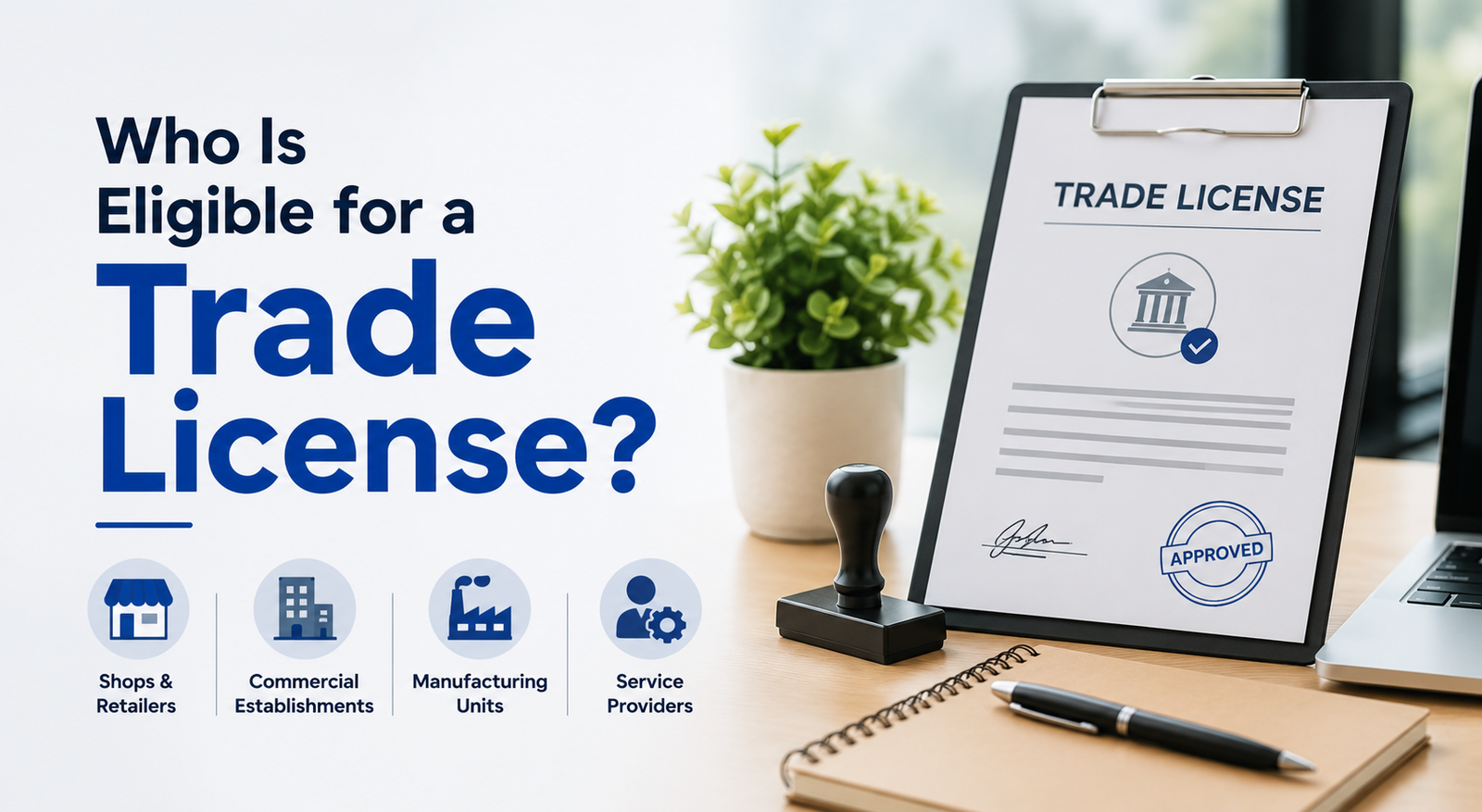
Any individual, partnership firm, limited liability partnership, company, shop owner, manufacturer, trader, service provider, or commercial establishment engaged in business activities within municipal limits may need a trade license.
The requirement generally depends on the nature of business, location, and local municipal regulations. Businesses that interact with the public, use commercial premises, or carry out manufacturing activities often fall within the licensing framework.
Moreover, authorities may require separate licenses for different business categories. Therefore, business owners should verify local rules before starting operations.
Businesses Commonly Required to Obtain a Trade License
Many types of establishments require licensing approval before operating.
Retail Shops
Retail establishments that sell goods directly to consumers usually require a trade license.
Examples include:
- Grocery stores
- Clothing shops
- Electronics stores
- Furniture outlets
- Gift shops
- Hardware stores
These businesses operate within municipal jurisdictions and must comply with local regulations.
Wholesale Businesses
Wholesale traders supply goods to retailers, distributors, or institutional buyers.
Common examples include:
- Food distributors
- Industrial supply businesses
- Building material suppliers
- Pharmaceutical wholesalers
Since these businesses handle significant commercial activities, licensing requirements often apply.
Service-Based Establishments
Service providers also frequently require trade licenses.
Examples include:
- Beauty salons
- Repair centers
- Consultancy offices
- Coaching centers
- Travel agencies
- Event management firms
Although these businesses may not manufacture products, they still conduct regulated commercial activities.
Trade License Requirements for Manufacturing Units
Manufacturing activities often involve additional compliance obligations.
Municipal authorities carefully regulate such establishments because manufacturing processes may affect public health, safety, and the environment.
Small Manufacturing Units
Small-scale manufacturers may require trade licenses before commencing production.
Examples include:
- Garment production units
- Bakery operations
- Furniture workshops
- Printing facilities
- Packaging units
These businesses must follow local zoning and safety requirements.
Medium and Large Manufacturing Operations
Larger manufacturing facilities generally face stricter regulatory scrutiny.
Additional approvals may relate to:
- Fire safety
- Environmental compliance
- Waste management
- Worker safety
- Building regulations
Consequently, obtaining a trade license often forms part of a broader compliance framework.
Commercial Establishments That Usually Need Licensing
Several commercial entities require trade licenses because of their direct interaction with customers and public spaces.
Examples include:
- Restaurants
- Cafes
- Hotels
- Lodges
- Banquet halls
- Entertainment centers
- Shopping complexes
Municipal authorities often inspect such establishments to verify compliance with health and safety standards.
Professional Offices and Trade Licenses
Not every professional office requires the same licensing treatment.
However, many professional establishments operating from commercial premises may need trade licenses depending on local rules.
Examples may include:
- Architectural firms
- Design studios
- Marketing agencies
- Business consulting firms
- Information technology offices
Requirements often vary according to municipal regulations and business activities.
Home-Based Businesses and Licensing Obligations
Home-based businesses have become increasingly common.
Many entrepreneurs operate from residential premises while offering products or services. However, a home-based setup does not automatically exempt a business from licensing requirements.
Several factors influence licensing obligations:
- Nature of business activity
- Customer footfall
- Storage of inventory
- Local zoning regulations
- Municipal guidelines
Therefore, business owners should confirm applicable requirements before starting operations.
Businesses That Handle Food Products
Food-related establishments often require trade licenses because public health considerations play a major role in regulatory oversight.
Examples include:
- Restaurants
- Bakeries
- Sweet shops
- Food processing units
- Catering businesses
- Juice centers
In many cases, these establishments may also require additional food-related approvals from relevant authorities.
Temporary and Seasonal Businesses
Some businesses operate only during specific periods.
Examples include:
- Festival stalls
- Exhibition booths
- Seasonal retail counters
- Fairground vendors
Municipal authorities may issue temporary licenses for such activities. However, operating without proper authorization can result in penalties.
Consequently, seasonal operators should verify licensing requirements well before commencing business activities.
Activities That May Require Separate Trade Licenses
Certain businesses engage in specialized activities requiring additional scrutiny.
Examples include:
- Chemical storage
- Industrial processing
- Fuel handling
- Scrap dealing
- Warehousing operations
Authorities often evaluate safety measures before granting approval.
Moreover, businesses may need multiple permissions depending on operational risks and regulatory requirements.
Key Factors Authorities Consider Before Issuing a Trade License
Municipal authorities evaluate several factors during the licensing process.
Business Location
The proposed business location must comply with zoning regulations and municipal rules.
Authorities assess whether the activity suits the designated area.
Nature of Activity
Certain activities involve greater risks than others.
Therefore, businesses handling hazardous materials or public-facing operations may face stricter reviews.
Safety Standards
Authorities often evaluate:
- Fire safety arrangements
- Emergency exits
- Structural conditions
- Public safety measures
Compliance with these standards supports license approval.
Health and Environmental Considerations
Businesses must avoid creating public health hazards.
Authorities may review:
- Waste disposal systems
- Sanitation arrangements
- Pollution control measures
- Environmental impact factors
Benefits of Obtaining a Trade License
A valid trade license provides numerous advantages.
Legal Compliance
Businesses can operate within the framework of applicable municipal regulations.
As a result, owners reduce the risk of enforcement actions.
Enhanced Business Reputation
Customers often prefer dealing with legally compliant businesses.
Moreover, licensing reflects professionalism and accountability.
Reduced Legal Risks
Businesses with valid licenses face fewer regulatory disputes.
Consequently, owners can focus more effectively on growth and operations.
Operational Stability
Proper licensing reduces the possibility of interruptions caused by regulatory objections.
This stability supports long-term business planning.
Better Access to Opportunities
Many commercial arrangements require proof of legal compliance.
Licensed businesses often find it easier to pursue partnerships and commercial opportunities.
Consequences of Operating Without a Trade License
Operating without the required license can create significant challenges.
Potential consequences may include:
- Monetary penalties
- Business closure notices
- Regulatory inspections
- Legal proceedings
- Damage to reputation
- Operational disruptions
Furthermore, repeated violations may attract stricter enforcement measures.
Business owners should therefore secure required approvals before beginning operations.
Common Documents Required for Trade License Applications
Documentation requirements differ among municipalities.
However, applicants commonly provide:
- Identity proof
- Address proof
- Business registration documents
- Property ownership documents
- Rental agreement, where applicable
- Site plan
- Photographs
- No-objection certificates, when required
Accurate documentation helps avoid unnecessary delays during processing.
Trade License Renewal Requirements
Obtaining a license is only the first step.
Many municipalities require periodic renewal to maintain validity.
Business owners should:
- Monitor renewal deadlines
- Submit updated information
- Pay applicable fees
- Maintain compliance records
Failure to renew on time may result in penalties or temporary suspension of business permissions.
How Business Owners Can Ensure Compliance?
Maintaining compliance requires ongoing attention.
Important practices include:
- Keeping licenses current
- Following municipal regulations
- Updating authorities regarding major changes
- Maintaining safety standards
- Preserving required records
- Cooperating during inspections
Consistent compliance helps businesses avoid regulatory complications.
Conclusion
A trade license plays a vital role in ensuring that businesses operate legally and responsibly within municipal limits. Retail shops, service providers, manufacturers, food establishments, commercial enterprises, and many other business categories may require this authorization before commencing operations. Proper licensing supports compliance, strengthens credibility, and reduces legal risks. By reviewing local requirements, maintaining valid documentation, and renewing licenses on time, business owners can build a stable foundation for sustainable and lawful business operations.
Frequently Asked Questions
1. Is a trade license mandatory for every business?
Not every business falls under identical regulations. However, many commercial, service-based, and manufacturing establishments require a trade license. Requirements vary according to municipal rules, location, and the nature of business activities. Business owners should verify local requirements before beginning operations.
2. Can a business operate before obtaining a trade license?
Businesses should obtain the required license before commencing operations. Operating without authorization may result in penalties, inspections, or closure notices. Compliance from the beginning helps avoid legal issues and supports smooth business functioning.
3. Do online businesses require a trade license?
An online business may require a trade license if municipal regulations apply to its operational location. Factors such as inventory storage, office premises, and local rules influence licensing obligations. Requirements differ among jurisdictions.
4. Is a trade license the same as business registration?
No. Business registration establishes the legal identity of an entity, while a trade license permits specific commercial activities within a municipal area. Many businesses require both depending on applicable regulations.
5. How long does a trade license remain valid?
Validity periods differ among municipalities. Some authorities issue licenses for a fixed period and require annual renewal. Business owners should review local regulations to ensure timely renewal and continued compliance.
6. Can a trade license be transferred to another person?
Transfer rules vary by municipality. In many cases, authorities require formal approval before transferring a license. Supporting documentation and applicable fees may also apply during the transfer process.
7. What happens if a license expires?
An expired license may expose a business to penalties and compliance issues. Authorities may restrict operations until renewal occurs. Therefore, businesses should track renewal dates carefully and submit applications on time.
8. Are home-based businesses exempt from trade licenses?
Not necessarily. Licensing requirements depend on local regulations and business activities. Even home-based operations may require approval if they involve commercial transactions, inventory storage, customer visits, or regulated services.
9. Can authorities reject a trade license application?
Yes. Authorities may reject applications that fail to meet zoning, safety, health, documentation, or regulatory requirements. Applicants can often address deficiencies and submit revised applications where permitted.
10. Does a trade license guarantee compliance with all laws?
No. A trade license addresses municipal authorization for business activities. Businesses must also comply with tax regulations, labor requirements, environmental obligations, safety standards, and any other applicable legal requirements.




Leave a Reply