
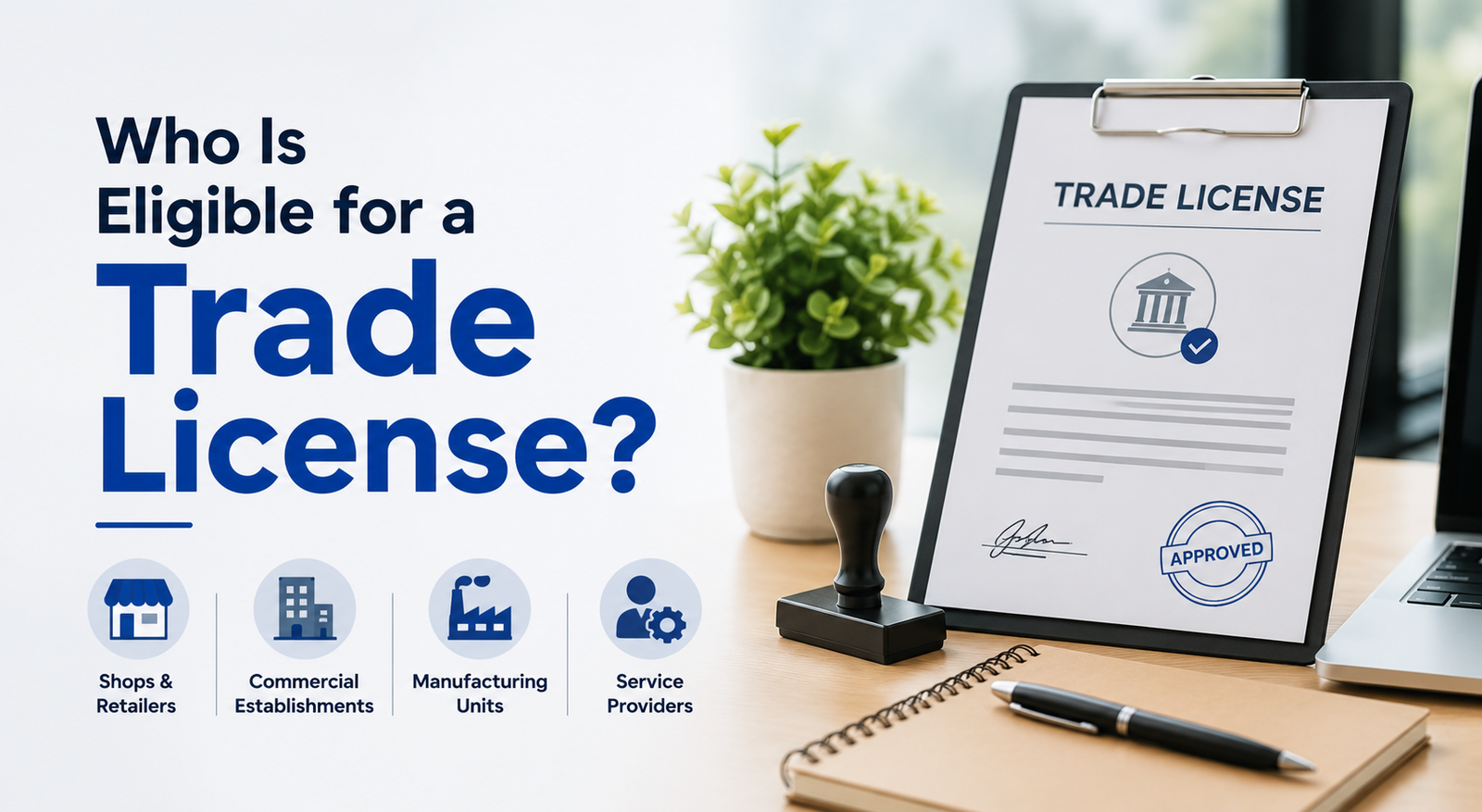
A trade license serves as an official authorization that permits a person or business entity to carry out specific commercial activities within a defined jurisdiction. Municipal authorities issue this license to regulate business operations and ensure compliance with local laws, safety standards, and public welfare requirements. Many entrepreneurs ask, Who Is Eligible for a Trade License? The answer depends on factors such as the nature of the business, location, legal structure, and compliance with applicable regulations. Obtaining a valid trade license helps businesses operate lawfully and maintain credibility among customers and authorities.
What Is a Trade License?
A trade license is a legal document issued by a local governing authority that grants permission to conduct a particular trade or business activity within a designated area. It confirms that the business complies with municipal regulations and operational standards.
The primary purpose of a trade license is not to establish ownership of a business. Instead, it ensures that business activities do not create health hazards, environmental concerns, or safety risks for the public.
Trade licenses apply to various commercial establishments, including retail stores, manufacturing units, service providers, restaurants, workshops, warehouses, and many other business categories.
Moreover, obtaining a trade license demonstrates a commitment to lawful business practices and regulatory compliance.
Why Is a Trade License Important?
Every business owner should recognize the significance of obtaining a trade license before commencing operations.
A valid trade license offers several advantages:
- Ensures legal operation of the business
- Promotes public safety and health standards
- Enhances business credibility
- Reduces the risk of penalties and legal disputes
- Supports smooth inspections by authorities
- Helps maintain organized commercial activities
- Facilitates regulatory compliance
Furthermore, authorities often require businesses to produce a valid trade license during inspections and audits. Consequently, operating without one can lead to fines, business closure notices, or other legal consequences.
Who Is Eligible for a Trade License?
The question Who Is Eligible for a Trade License? has different answers depending on the type of business and local regulations. However, several general eligibility conditions apply in most cases.
A person or organization may qualify for a trade license if they satisfy the prescribed requirements established by the local authority.
Eligibility generally includes:
- Individuals conducting lawful business activities
- Sole proprietorship businesses
- Partnership firms
- Limited liability partnerships
- Private entities
- Public entities
- Manufacturing units
- Service providers
- Retail establishments
- Wholesale businesses
However, the business activity must comply with zoning laws and municipal regulations applicable to the location where operations take place.
Eligibility Criteria for Individual Applicants
Individuals often seek trade licenses to start small or medium-sized businesses.
Minimum Age Requirement
Most authorities require applicants to be adults. Therefore, an applicant generally must be at least 18 years old to obtain a trade license.
The applicant must possess the legal capacity to enter contracts and manage business responsibilities.
Lawful Business Activity
The proposed business activity must be legal and permissible under applicable regulations.
Authorities typically reject applications involving prohibited or unauthorized activities.
Suitable Business Premises
The business location must comply with municipal guidelines.
For example, authorities may verify:
- Building safety conditions
- Zoning compliance
- Sanitation standards
- Fire safety requirements
- Environmental regulations
Consequently, applicants must ensure that the selected premises support the intended business activity.
Eligibility for Sole Proprietorship Businesses
A sole proprietorship represents one of the most common business structures.
The proprietor generally qualifies for a trade license if:
- The business activity is lawful
- The premises meet local requirements
- Required documentation is available
- Applicable fees are paid
- Municipal regulations are satisfied
Moreover, authorities may inspect the premises before approving the application.
Many small shops, repair centers, beauty salons, grocery stores, and service businesses operate under this structure.
Documents Commonly Required
Although requirements differ among jurisdictions, authorities often request:
- Identity proof
- Address proof
- Business address proof
- Property tax receipts
- Rental agreement, if applicable
- Passport-sized photographs
- Business activity details
Submitting complete documentation improves the likelihood of timely approval.
Eligibility for Partnership Firms
Partnership firms also qualify for trade licenses when they comply with prescribed regulations.
Each partner shares responsibility for maintaining compliance and lawful business operations.
Authorities generally require:
- Partnership agreement
- Identity documents of partners
- Address proof of partners
- Business premises documents
- Details of the proposed trade activity
Additionally, authorities may review the partnership structure to verify the legitimacy of the business.
A partnership firm operating within approved commercial premises usually satisfies basic eligibility requirements.
Eligibility for Limited Liability Partnerships
Limited Liability Partnerships combine operational flexibility with a separate legal identity.
These entities may obtain trade licenses when they satisfy local licensing requirements.
Eligibility usually depends on:
- Valid organizational registration
- Authorized business activities
- Compliance with zoning regulations
- Suitable business premises
- Submission of required records
Furthermore, municipal authorities may evaluate the nature of operations before issuing approval.
Many consulting firms, professional service providers, and technology businesses apply for trade licenses under this structure.
Eligibility for Companies
Registered companies frequently require trade licenses before commencing operations.
Both private and public entities may qualify, provided they satisfy local regulations.
Authorities generally evaluate:
- Legal registration status
- Nature of business activity
- Location of operations
- Compliance with safety standards
- Environmental requirements
- Building regulations
Moreover, businesses conducting specialized activities may require additional approvals from relevant departments before obtaining a trade license.
Factors Considered During Evaluation
Authorities often examine several factors before granting approval:
- Business category
- Public safety impact
- Environmental implications
- Traffic and accessibility concerns
- Fire safety compliance
- Building usage permissions
Consequently, companies should assess these requirements before applying.
Eligibility for Retail Businesses
Retail establishments form a significant portion of trade license applicants.
Common examples include:
- Grocery stores
- Clothing shops
- Electronics outlets
- Furniture stores
- Bookstores
- Medical supply shops
- Gift stores
Retail businesses generally qualify if they operate from approved premises and comply with local regulations.
Additionally, authorities may inspect the premises to verify hygiene, accessibility, and safety standards.
Retail operators must also ensure that their activities align with the permitted use of the property.
Eligibility for Wholesale Businesses
Wholesale businesses often handle larger quantities of goods and require adequate storage facilities.
Authorities typically evaluate:
- Storage arrangements
- Building safety
- Traffic management considerations
- Fire protection measures
- Environmental compliance
A wholesale business usually becomes eligible when it fulfills these operational requirements.
Furthermore, warehouses and distribution centers may require additional approvals depending on the products being handled.
Eligibility for Service-Based Businesses
Service providers also fall within the scope of trade licensing requirements.
Examples include:
- Repair centers
- Consulting services
- Beauty salons
- Training institutes
- Travel agencies
- Printing services
- Design studios
- Maintenance services
These businesses generally qualify when they operate from legally approved premises and comply with applicable standards.
Moreover, service providers must ensure that their activities do not violate zoning restrictions or create public inconvenience.
Eligibility for Manufacturing Units
Manufacturing businesses often face more detailed scrutiny due to operational risks and environmental considerations.
Authorities generally examine:
- Factory location
- Machinery installation
- Waste management systems
- Worker safety measures
- Fire protection systems
- Environmental safeguards
As a result, manufacturing units usually undergo a more extensive approval process than retail or service establishments.
Eligibility for Home-Based Businesses
Many entrepreneurs start operations from home due to lower costs and greater flexibility. However, eligibility for a trade license depends on whether local regulations permit commercial activities in residential areas.
Authorities commonly evaluate:
- Nature of the business
- Expected customer visits
- Noise levels
- Storage requirements
- Safety concerns
- Impact on neighbors
Businesses that involve consulting, freelancing, online services, or professional work often qualify more easily. In contrast, activities involving heavy machinery or large-scale manufacturing may not receive approval in residential zones.
Therefore, applicants should verify zoning rules before beginning operations.
Eligibility for Food-Related Businesses
Food establishments generally require a trade license because they directly affect public health and safety.
Examples include:
- Restaurants
- Cafes
- Bakeries
- Food stalls
- Catering services
- Cloud kitchens
- Snack outlets
Authorities usually assess:
- Kitchen hygiene
- Waste disposal methods
- Water supply systems
- Ventilation arrangements
- Food storage practices
- Fire safety measures
Moreover, food businesses may need additional regulatory approvals depending on local requirements. Compliance with sanitation standards remains a critical factor in determining eligibility.
Eligibility for Temporary and Seasonal Businesses
Some businesses operate only during specific periods or events.
Examples include:
- Festival stalls
- Exhibition booths
- Seasonal retail outlets
- Temporary food counters
- Fairground businesses
These establishments may qualify for temporary trade licenses rather than permanent ones.
Authorities often consider:
- Duration of operation
- Business location
- Public safety measures
- Crowd management plans
- Waste disposal arrangements
Consequently, applicants must provide accurate details regarding the proposed period of operation.
Businesses That May Not Qualify
Although many businesses can obtain a trade license, certain situations may result in rejection.
Authorities may deny applications when:
- The business activity is prohibited by law
- The premises violate zoning regulations
- Safety requirements remain unmet
- Required documents are incomplete
- Environmental concerns exist
- Fire protection measures are inadequate
- False information appears in the application
Furthermore, businesses that pose significant risks to public welfare may face additional restrictions.
Applicants should address all compliance requirements before submitting their applications.
Common Documents Required for Eligibility Assessment
Documentation plays an important role in the approval process.
While requirements vary, authorities frequently request:
- Identity proof of the applicant
- Residential address proof
- Business address proof
- Property ownership documents
- Rental agreement, if applicable
- Passport-sized photographs
- Business registration documents
- Layout plan of premises
- Tax-related records
- Utility bills
Moreover, specific industries may need supplementary documentation to demonstrate regulatory compliance.
Submitting accurate and updated records helps avoid unnecessary delays.
Factors Authorities Consider Before Issuing a Trade License
The answer to Who Is Eligible for a Trade License? often depends on several practical considerations beyond basic documentation.
Authorities generally evaluate the following:
Business Location
The proposed premises must support the intended activity.
For example, a manufacturing unit may require an industrial zone, whereas a retail store may operate in a commercial area.
Public Safety
Businesses must not create risks to nearby residents, customers, or employees.
Authorities often review:
- Emergency exits
- Fire prevention measures
- Structural safety
- Electrical systems
Environmental Impact
Certain businesses may generate waste, emissions, or noise.
Consequently, authorities assess whether the business can operate responsibly without harming the surrounding environment.
Compliance History
Existing businesses seeking renewal may undergo review based on previous compliance records.
Good compliance practices often contribute to smoother approval processes.
Application Process for a Trade License
After determining eligibility, applicants must follow the prescribed application procedure.
Although the exact process varies, it generally includes the following steps:
Step 1: Identify the Relevant Authority
Applicants should determine which local authority governs the business location.
Step 2: Complete the Application
The applicant must provide accurate information regarding:
- Business type
- Ownership structure
- Location
- Nature of operations
Step 3: Submit Documents
Required documents should accompany the application form.
Step 4: Pay Applicable Fees
Authorities generally charge fees based on business category and size.
Step 5: Inspection
In many cases, officials inspect the premises to verify compliance.
Step 6: Approval and Issuance
Once authorities complete verification successfully, they issue the trade license.
Responsibilities After Obtaining a Trade License
Receiving a trade license marks the beginning of ongoing compliance obligations.
Business owners must:
- Follow municipal regulations
- Maintain hygiene standards
- Ensure workplace safety
- Renew licenses on time
- Cooperate during inspections
- Report significant operational changes
- Maintain accurate business records
Furthermore, authorities may conduct periodic reviews to ensure continued compliance.
Failure to meet these obligations can result in penalties or suspension of the license.
Renewal Requirements
Trade licenses often remain valid for a limited period.
Therefore, business owners must renew them before expiration.
Renewal commonly requires:
- Submission of renewal applications
- Payment of prescribed fees
- Updated business information
- Compliance verification
- Supporting documentation
Timely renewal helps prevent operational disruptions and regulatory complications.
Moreover, maintaining continuous validity reflects responsible business management.
Benefits of Meeting Trade License Eligibility Requirements
Businesses that satisfy licensing requirements gain several operational advantages.
These benefits include:
- Legal recognition of business activities
- Greater customer confidence
- Improved regulatory compliance
- Reduced legal risks
- Better access to commercial opportunities
- Enhanced reputation
- Easier interaction with government authorities
Additionally, compliance strengthens business stability and supports long-term growth objectives.
Conclusion
The answer to Who Is Eligible for a Trade License? depends on the nature of the business, the location of operations, compliance with municipal regulations, and fulfillment of documentation requirements. Individuals, partnerships, companies, retailers, service providers, wholesalers, and manufacturing units can generally qualify when they meet prescribed standards. A valid trade license supports lawful operations, promotes public safety, and strengthens business credibility. Therefore, every business owner should verify local requirements carefully and ensure full compliance before commencing commercial activities
Frequently Asked Questions
1. Who Is Eligible for a Trade License?
Individuals, proprietorships, partnership firms, limited liability partnerships, companies, retailers, wholesalers, service providers, and manufacturing units may qualify. Eligibility depends on lawful business activities, suitable premises, proper documentation, and compliance with local regulations established by the licensing authority.
2. Is a trade license mandatory for every business?
Many commercial establishments require a trade license before commencing operations. Requirements vary according to location and business type. Businesses should verify local regulations because operating without the necessary license may result in penalties, restrictions, or closure notices.
3. Can a home-based business obtain a trade license?
Yes, many home-based businesses can obtain a trade license if local zoning rules permit commercial activities. Authorities evaluate factors such as customer traffic, safety concerns, storage requirements, and the overall impact of business operations on neighboring properties.
4. What documents are usually required for a trade license application?
Authorities commonly request identity proof, address proof, business address records, ownership documents, rental agreements, photographs, registration records, and supporting compliance documents. Specific requirements vary according to business category and local regulations.
5. Can a partnership firm apply for a trade license?
Yes, partnership firms generally qualify if they meet all eligibility requirements. Authorities often require partnership agreements, partner identification records, premises documents, and details regarding business operations before considering the application for approval.
6. Do manufacturing businesses need a trade license?
Manufacturing units usually require a trade license because their operations may affect safety, health, and environmental conditions. Authorities assess waste management practices, machinery installations, worker protection measures, and compliance with applicable regulations before approval.
7. How long does it take to obtain a trade license?
Processing times vary according to location, business category, document completeness, and inspection requirements. Applications with accurate information and complete supporting records generally move through the approval process more efficiently than incomplete submissions.
8. Can authorities reject a trade license application?
Yes, authorities may reject applications if the proposed business violates zoning rules, lacks required documentation, presents safety concerns, provides inaccurate information, or fails to comply with legal and regulatory requirements applicable to the business activity.
9. Is trade license renewal necessary?
Yes, renewal is generally necessary because trade licenses often remain valid only for a specified period. Business owners should complete renewal procedures before expiration to maintain uninterrupted operations and continued compliance with regulatory obligations.
10. What happens if a business operates without a trade license?
Operating without a required trade license may lead to fines, legal action, suspension of activities, or closure orders. Consequently, obtaining and maintaining a valid license helps businesses operate legally and avoid unnecessary regulatory complications.




Leave a Reply