
India’s taxation framework requires businesses to comply with Goods and Services Tax regulations when their operations meet specified criteria. Consequently, GST registration plays a critical role in maintaining legal compliance and smooth commercial activity. Many businesses remain uncertain about whether registration applies to their operations, especially during early growth stages. The requirement extends beyond large corporations and may affect service providers, online sellers, manufacturers, freelancers, and small enterprises. Proper registration supports taxation transparency, business credibility, and operational continuity. Businesses operating without required registration may face penalties, restrictions, and compliance-related complications that affect long-term commercial stability and growth opportunities.
What Is GST Registration?
GST registration refers to the process through which businesses obtain official recognition under the Goods and Services Tax system implemented in India. Consequently, registered entities receive a unique GST identification number allowing them to collect and remit tax legally.
The registration framework applies to businesses supplying goods or services beyond prescribed turnover thresholds or conducting specified commercial activities. Moreover, registration enables businesses to claim input tax credits and maintain tax compliance within India’s indirect taxation structure.
A registered business must comply with invoicing standards, return filing obligations, and tax payment requirements according to applicable regulations. Therefore, registration forms an essential part of commercial operations for many businesses across sectors.
Purpose of GST Registration
GST registration supports tax administration, transparency, and organized commercial activity across India. Consequently, businesses operating within regulated taxation structures contribute to smoother economic operations and compliance monitoring.
Tax Collection and Compliance
Authorities use GST registration to monitor tax collection and commercial transactions more effectively. Moreover, registration improves transparency within supply chains and business operations.
Input Tax Credit Benefits
Registered businesses may claim credit for taxes paid on purchases used for commercial operations. Consequently, businesses may reduce overall tax liability within applicable rules.
Legal Business Recognition
GST registration strengthens operational legitimacy and tax compliance credibility. Therefore, clients, vendors, and institutions often prefer dealing with registered businesses.
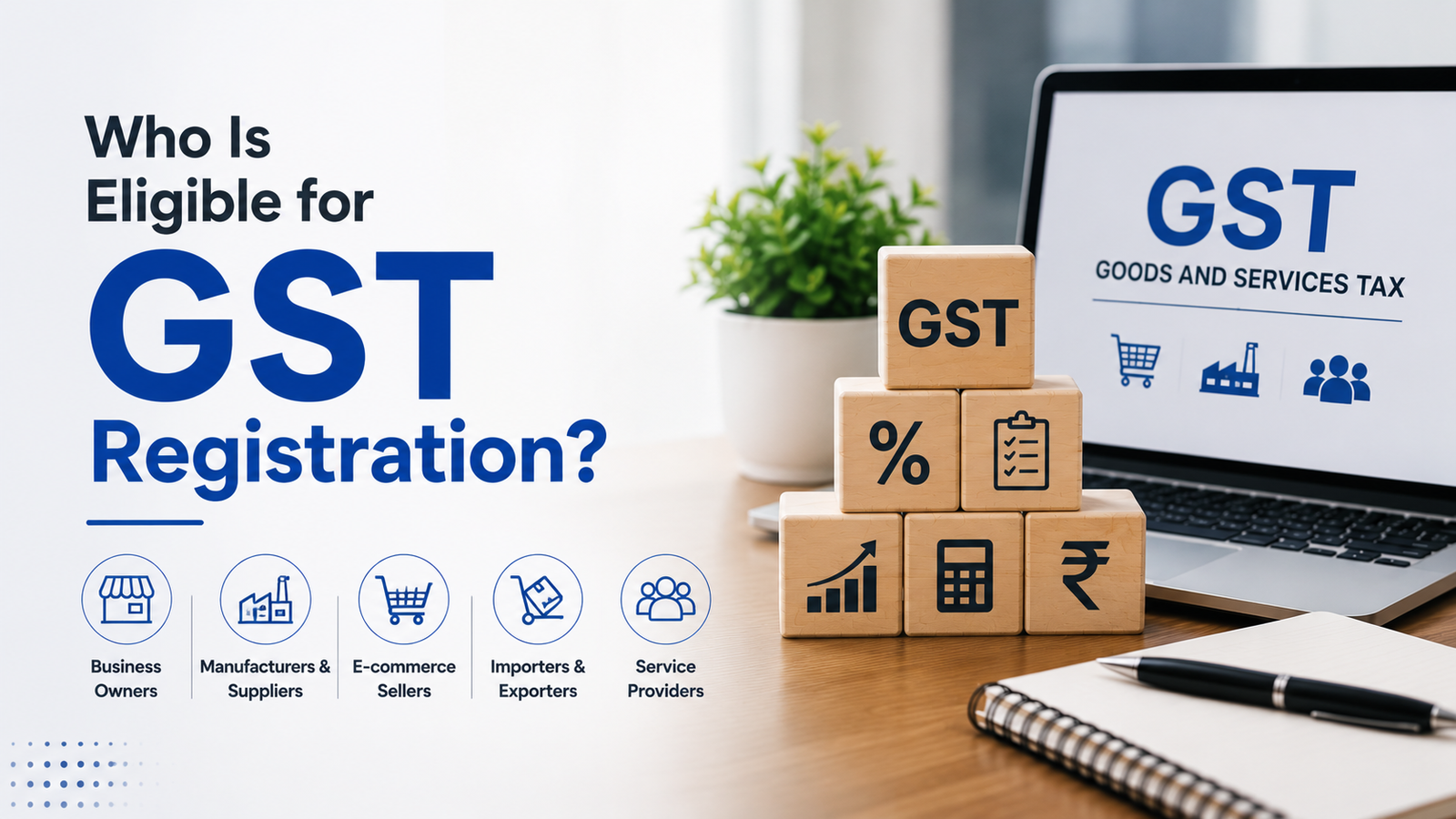
Who Needs GST Registration in India?
Several business categories require registration under GST laws. Consequently, entrepreneurs and business owners should carefully evaluate applicability before commencing operations.
Businesses Crossing Turnover Thresholds
Businesses exceeding prescribed turnover limits generally require registration.
Applicable categories may include:
- Goods suppliers
- Service providers
- Manufacturers
- Retail traders
- Consultants
- Distributors
Turnover thresholds differ depending on business activity and state classification.
Interstate Suppliers
Businesses supplying goods or services across state borders often require registration regardless of turnover in certain situations. Consequently, expanding operations beyond one state increases compliance responsibilities significantly.
E-Commerce Sellers
Online sellers operating through e-commerce platforms commonly require registration because digital transactions fall within regulated taxation frameworks.
GST Registration for Service Providers
Service providers frequently require GST registration when annual turnover exceeds prescribed limits. Consequently, consultants, freelancers, agencies, and professional service firms should monitor revenue carefully.
Applicable service categories may include:
- Marketing agencies
- Legal consultants
- Financial advisors
- Software developers
- Architects
- Coaching providers
Service providers conducting interstate operations may also require registration under specific conditions.
Businesses Required to Register Regardless of Turnover
Certain businesses must register irrespective of annual turnover because of operational category and tax regulations.
Such businesses may include:
- Interstate taxable suppliers
- E-commerce operators
- Casual taxable persons
- Non-resident taxable persons
- Input service distributors
- Tax deduction entities
Consequently, even smaller enterprises may face mandatory registration obligations depending on business activity and transaction structure.
Importance of GST Registration for Businesses
GST registration provides operational, financial, and regulatory advantages supporting business growth and compliance. Consequently, many businesses voluntarily register even below mandatory thresholds.
Enhanced Business Credibility
Registered businesses often appear more reliable to customers, institutions, and vendors. Moreover, registration demonstrates taxation compliance and operational transparency.
Expansion Opportunities
Many corporate clients and government departments prefer working with registered vendors. Consequently, registration supports broader commercial opportunities.
Simplified Taxation Structure
GST creates a unified taxation system reducing multiple indirect tax complexities across states and sectors.
Documents Required for GST Registration
Businesses must provide supporting documentation during registration procedures. Consequently, maintaining organized records helps businesses complete applications more efficiently.
Commonly required documents include:
- PAN card
- Aadhaar card
- Business address proof
- Bank account details
- Photographs of promoters
- Incorporation certificates
- Partnership deeds where applicable
- Authorization documents
- Digital signatures for companies
Additional documents may apply depending on entity structure and operational activity.
GST Registration Process
The registration process primarily occurs through online government portals. Consequently, businesses can complete procedures digitally with structured documentation and verification systems.
Application Submission
Applicants submit business details, operational information, and supporting documents through designated portals.
Verification Procedures
Authorities verify submitted information and may request clarification where discrepancies appear.
Approval and GSTIN Issuance
After successful verification, authorities issue the GST Identification Number enabling businesses to commence compliant taxation operations.
GST Registration for Freelancers and Professionals
Freelancers increasingly contribute to India’s service economy across multiple industries. Consequently, many independent professionals may require GST registration depending on annual turnover and operational structure.
Applicable professionals may include:
- Content creators
- Designers
- Digital marketers
- Financial consultants
- IT professionals
- Trainers and educators
Freelancers providing interstate services or working with corporate clients often pursue registration to maintain smoother business relationships and tax compliance.
GST Registration for Startups
Startups frequently experience rapid operational growth and expanding commercial activity. Consequently, GST compliance becomes increasingly important during scaling stages.
Support for Business Expansion
Registered startups often experience fewer barriers while working with vendors, investors, and institutional clients.
Improved Financial Management
GST compliance encourages organized invoicing, accounting, and taxation systems supporting operational discipline.
Better Vendor Relationships
Many suppliers prefer dealing with registered entities because input tax credits depend on proper compliance procedures.
Composition Scheme and Small Businesses
Small businesses may opt for the GST composition scheme under specified eligibility conditions. Consequently, simplified tax compliance becomes available for qualifying enterprises.
Reduced Compliance Burden
Composition taxpayers generally face simplified return filing obligations and lower administrative complexity.
Limited Tax Collection Rights
Businesses under the composition scheme cannot collect tax from customers separately or claim input tax credit benefits.
Eligibility Restrictions
Certain interstate suppliers and service providers may not qualify for composition scheme benefits under applicable rules.
Consequences of Non-Registration
Businesses failing to obtain required GST registration may face significant legal and financial consequences. Consequently, timely compliance remains essential for operational stability.
Common consequences include:
- Financial penalties
- Interest liabilities
- Tax recovery actions
- Operational restrictions
- Legal notices
- Suspension of commercial activities
Repeated violations may create broader compliance complications affecting long-term business credibility and taxation standing.
GST Registration for E-Commerce Businesses
Digital commerce continues expanding rapidly across India’s commercial sectors. Consequently, GST regulations apply strongly to e-commerce activities and online transactions.
Online sellers operating through digital marketplaces often require registration regardless of turnover in specified situations. Moreover, e-commerce operators themselves maintain additional compliance obligations under GST regulations.
Applicable businesses may include:
- Online retailers
- Digital product sellers
- Marketplace vendors
- Subscription service providers
- Online educational platforms
Registration helps online businesses maintain structured taxation systems and smoother vendor coordination across multiple states.
Input Tax Credit and Business Benefits
Input tax credit represents one of the most important advantages associated with GST registration. Consequently, registered businesses may reduce effective tax costs through proper compliance management.
Reduction of Tax Burden
Businesses may claim credits for GST paid on purchases used during commercial operations.
Improved Cash Flow Management
Input credits help businesses manage working capital more efficiently by reducing cumulative tax expenses.
Transparent Taxation Structure
The credit system reduces cascading tax effects and improves taxation transparency across supply chains.
GST Compliance Responsibilities After Registration
Registration creates ongoing compliance responsibilities for businesses. Consequently, registered entities must maintain proper operational and taxation records consistently.
Important compliance obligations include:
- Timely return filing
- Accurate invoicing
- Tax payment compliance
- Record maintenance
- Invoice reconciliation
- Financial transparency
Failure to maintain compliance may result in penalties and operational complications.
Role of GST in Interstate Trade
GST significantly simplified interstate taxation procedures across India’s commercial markets. Consequently, businesses operating nationally now experience more structured tax administration.
Interstate suppliers must carefully maintain:
- Correct invoice documentation
- Tax classification accuracy
- Place of supply compliance
- Return filing consistency
Consequently, GST registration supports smoother expansion into multiple states while reducing traditional taxation complexities associated with interstate commercial operations and supply chain management activities.
GST Registration for Manufacturers
Manufacturing businesses commonly require GST registration because production and distribution activities involve taxable supply chains. Consequently, manufacturers benefit significantly from organized input tax credit systems.
Applicable manufacturing sectors may include:
- Textile production
- Food processing
- Furniture manufacturing
- Engineering units
- Packaging industries
- Consumer goods manufacturing
GST registration helps manufacturers maintain transparent procurement systems, smoother vendor relationships, and efficient taxation structures supporting operational scalability and financial planning.
Common Mistakes Businesses Make During GST Registration
Several businesses face compliance difficulties because of avoidable registration errors. Consequently, careful preparation remains essential during application procedures.
Common mistakes include:
- Incorrect business classification
- Mismatched documentation
- Inaccurate address details
- Wrong bank information
- Delayed application submission
- Improper turnover calculation
Businesses should review operational details carefully before completing registration forms to reduce approval delays and compliance-related complications later.
Importance of Accurate GST Invoicing
Proper invoicing forms a central component of GST compliance. Consequently, registered businesses must issue invoices containing required operational and taxation details accurately.
Important invoice components generally include:
- GSTIN details
- Invoice number
- Taxable value
- Applicable tax rates
- Place of supply
- Customer information
Accurate invoicing supports tax transparency, input credit claims, and smoother return reconciliation procedures between businesses and tax authorities.
GST Registration and Business Credibility
Business credibility significantly influences commercial relationships and operational opportunities. Consequently, GST registration often strengthens market confidence among vendors, institutions, and clients.
Registered businesses generally appear more professional because compliance demonstrates structured financial management and legal accountability. Moreover, many corporate organizations prefer working exclusively with GST-compliant vendors during procurement and partnership activities.
Proper GST Registration also supports smoother participation in tenders, institutional contracts, and large-scale commercial transactions requiring documented taxation compliance and financial transparency.
Role of GST Registration in Financial Documentation
Financial institutions frequently evaluate taxation compliance before approving business financing or commercial services. Consequently, GST registration supports stronger financial documentation for operational activities.
Banks and institutions may request GST-related records during:
- Business loan applications
- Credit evaluations
- Working capital assessments
- Vendor financing procedures
- Commercial account verification
Consequently, organized GST compliance may improve institutional confidence and financial accessibility for growing businesses operating within competitive commercial sectors across India.
Digital GST Systems and Online Compliance
India’s GST framework relies heavily on digital compliance systems supporting transparency and operational efficiency. Consequently, businesses complete most registration, filing, and tax payment procedures online.
Digital systems generally support:
- Registration applications
- Return submissions
- Tax payments
- Invoice reporting
- Compliance tracking
Online compliance improves administrative efficiency and recordkeeping accuracy. However, businesses must regularly monitor filing deadlines and reconciliation procedures to avoid penalties or operational disruptions related to delayed taxation compliance.
GST Registration for Importers and Exporters
Import and export businesses operate within highly regulated taxation and customs frameworks. Consequently, GST registration becomes essential for many international trade activities.
Importers generally require registration because imported goods attract applicable GST during customs clearance procedures. Moreover, exporters often maintain registration to claim refunds and comply with international taxation documentation requirements.
Proper GST compliance supports smoother customs procedures, financial reconciliation, and cross-border commercial operations within structured regulatory environments and international supply chain systems.
Conclusion
GST registration remains an essential compliance requirement for many businesses operating across India’s commercial sectors. Consequently, manufacturers, retailers, service providers, freelancers, startups, e-commerce sellers, and interstate suppliers often require registration depending on turnover and operational activities. Proper compliance supports taxation transparency, financial organization, input tax credit benefits, and operational credibility. Businesses should carefully evaluate eligibility, maintain accurate documentation, and fulfill ongoing filing responsibilities consistently. Organized GST compliance ultimately strengthens business stability, supports smoother commercial growth, and reduces legal or financial risks associated with taxation violations and administrative enforcement actions.
FAQs
1. Who must obtain GST registration in India?
Businesses crossing prescribed turnover limits, interstate suppliers, e-commerce sellers, and certain specified entities generally require GST registration. Consequently, manufacturers, service providers, retailers, freelancers, and startups should evaluate operational activities carefully to determine whether registration obligations apply under current taxation regulations and compliance requirements.
2. Is GST registration mandatory for small businesses?
Small businesses crossing applicable turnover thresholds usually require registration. However, some businesses below thresholds may voluntarily register to claim input tax credits and improve credibility. Consequently, operational structure, business activity, and interstate transactions significantly influence whether registration becomes mandatory under GST regulations.
3. Can freelancers require GST registration?
Yes, freelancers may require GST registration if annual turnover exceeds prescribed limits or if they provide interstate taxable services under applicable rules. Consequently, consultants, designers, developers, and digital professionals often monitor revenue carefully to maintain proper taxation compliance and avoid operational complications later.
4. What documents are necessary for GST registration?
Applicants generally require PAN details, Aadhaar information, address proof, bank account records, incorporation certificates, and business-related documentation. Moreover, authorities may request additional records depending on business structure and operational category. Accurate documentation significantly improves approval efficiency and reduces application-related delays or compliance concerns.
5. What happens if businesses fail to register under GST?
Non-compliant businesses may face penalties, interest liabilities, legal notices, and operational restrictions from tax authorities. Moreover, delayed registration may create financial complications related to unpaid taxes and compliance enforcement actions. Timely registration helps businesses maintain smoother commercial operations and legal taxation standing consistently.
6. Can businesses voluntarily register for GST?
Yes, businesses operating below mandatory turnover thresholds may voluntarily register under GST regulations. Consequently, voluntary registration may improve credibility, enable input tax credit claims, and support smoother vendor relationships. Many startups and growing businesses choose voluntary registration for operational and commercial advantages.
7. Does GST registration help businesses claim tax credits?
Registered businesses may claim input tax credits for taxes paid on eligible business purchases used during operations. Consequently, GST registration often reduces effective tax burdens and improves financial efficiency. Proper invoicing and compliance management remain essential for successfully claiming input tax benefits under regulations.
8. Are e-commerce sellers required to register for GST?
Many e-commerce sellers require GST registration regardless of turnover because online transactions fall within specified taxation regulations. Consequently, businesses operating through digital marketplaces should evaluate compliance obligations carefully before commencing sales activities across online commercial platforms and interstate supply channels within India.
9. What are the compliance responsibilities after GST registration?
Registered businesses must file returns, maintain accurate invoices, pay taxes on time, and preserve operational records properly. Moreover, businesses should reconcile invoices and monitor compliance deadlines consistently. Failure to maintain compliance may result in penalties, operational complications, and taxation-related legal enforcement actions from authorities.
10. Why do businesses consider GST registration important?
GST registration strengthens legal compliance, operational credibility, and financial transparency for businesses. Moreover, it supports input tax credit benefits, institutional trust, and smoother commercial expansion opportunities. Consequently, many businesses consider GST compliance essential for sustainable growth and organized taxation management across competitive commercial environments.







Leave a Reply